



Understanding Valve Types and Their Role in Pipeline Safety
In any pipeline or industrial system, valves play a critical role in maintaining safety, controlling flow, and protecting equipment. Whether […]
-
 Author Twinco
 -
 3 Min
3 Min -
 19 May 2026
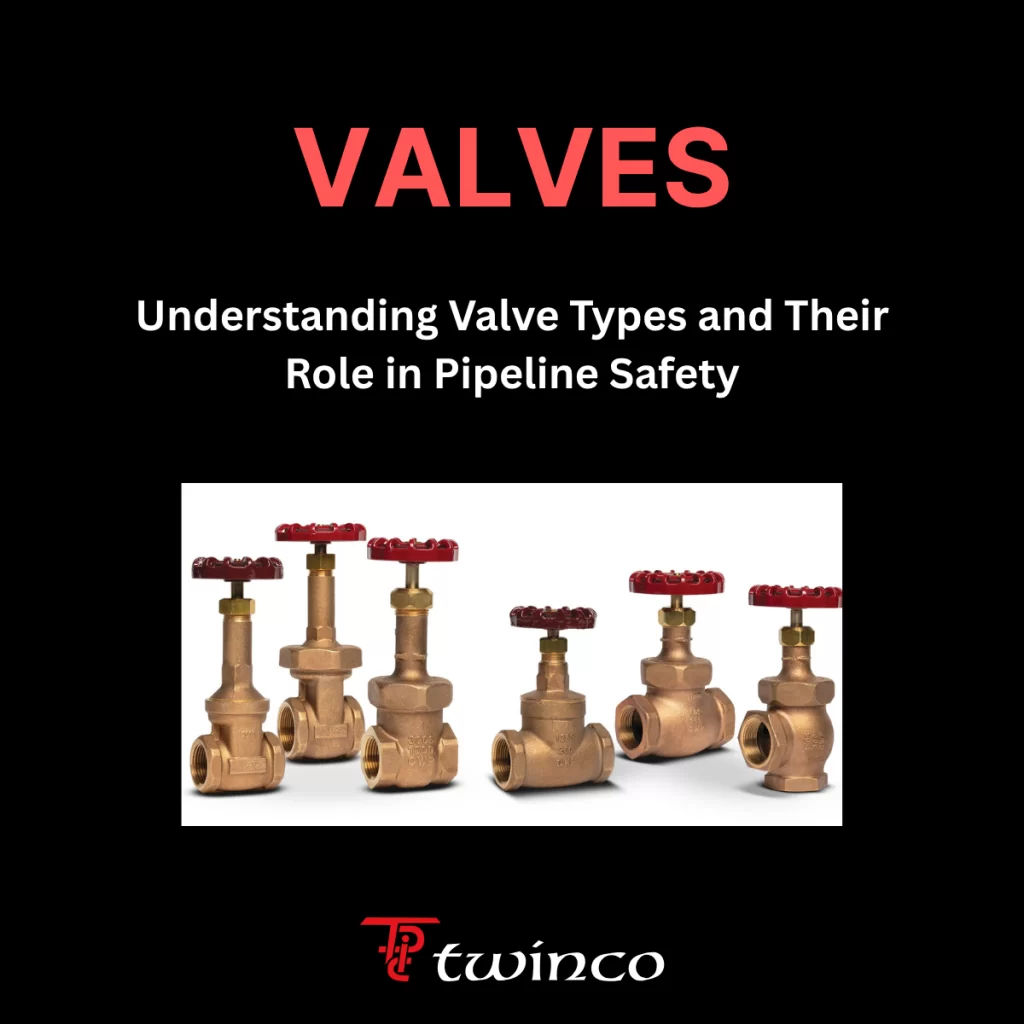
In any pipeline or industrial system, valves play a critical role in maintaining safety, controlling flow, and protecting equipment. Whether during normal operations, maintenance, or emergency shutdowns, selecting the right valve type can make the difference between smooth performance and costly failure.
Each valve is designed with a specific function in mind. Understanding how they work – and where they should be used – is key to ensuring system integrity.
Gate Valves: Reliable Isolation
Gate valves are primarily used for on/off control. They operate by lifting a gate out of the flow path, allowing full, unobstructed flow when open.
Why they matter:
- Provide tight shutoff for isolation
- Minimal pressure drop when fully open
- Ideal for applications where valves remain either fully open or fully closed
Best used for:
Pipeline isolation, upstream/downstream shutdown points, and applications where flow restriction is not desired.
Globe Valves: Precise Flow Control
Globe valves are designed for throttling and regulating flow. Their internal structure allows operators to adjust flow rates with greater precision.
Why they matter:
- Excellent control over flow and pressure
- Suitable for frequent operation
- More precise than gate valves in modulating service
Best used for:
Systems requiring flow regulation, pressure control, or frequent adjustments.
Check Valves: Preventing Backflow
Check valves automatically allow flow in one direction and prevent reverse flow. They operate without manual intervention, making them essential for system protection.
Why they matter:
- Protect pumps and compressors from damage
- Prevent contamination from reverse flow
- Reduce risk of pressure surges and system instability
Best used for:
Pump discharge lines, compressor systems, and anywhere backflow could cause damage or safety concerns.
Ball Valves: Fast, Reliable Shutoff
Ball valves use a rotating ball with a bore to control flow. A simple quarter-turn provides quick and effective shutoff.
Why they matter:
- Fast operation (quarter-turn open/close)
- Strong sealing capability
- Durable and reliable in high-pressure environments
Best used for:
Emergency shutoff, high-pressure systems, and applications requiring quick, dependable isolation.
Why Valve Selection Matters
No single valve type fits every application. Choosing the wrong valve can lead to:
- Leaks or pressure loss
- Equipment damage
- Safety risks during operation or shutdown
Proper valve selection ensures:
- Controlled flow and pressure
- System integrity under demanding conditions
- Safe and efficient operations across the lifecycle of the pipeline
Supporting Safe Operations
From isolation to flow control and backflow prevention, valves are a critical component of pipeline safety. Having access to the right valve types – when and where they’re needed – helps teams operate with confidence, especially in high-pressure and time-sensitive environments.
Explore More Blogs
Stay informed with our deep dives into industry trends, best practices, and essential product knowledge to help you make smarter decisions.
Rental
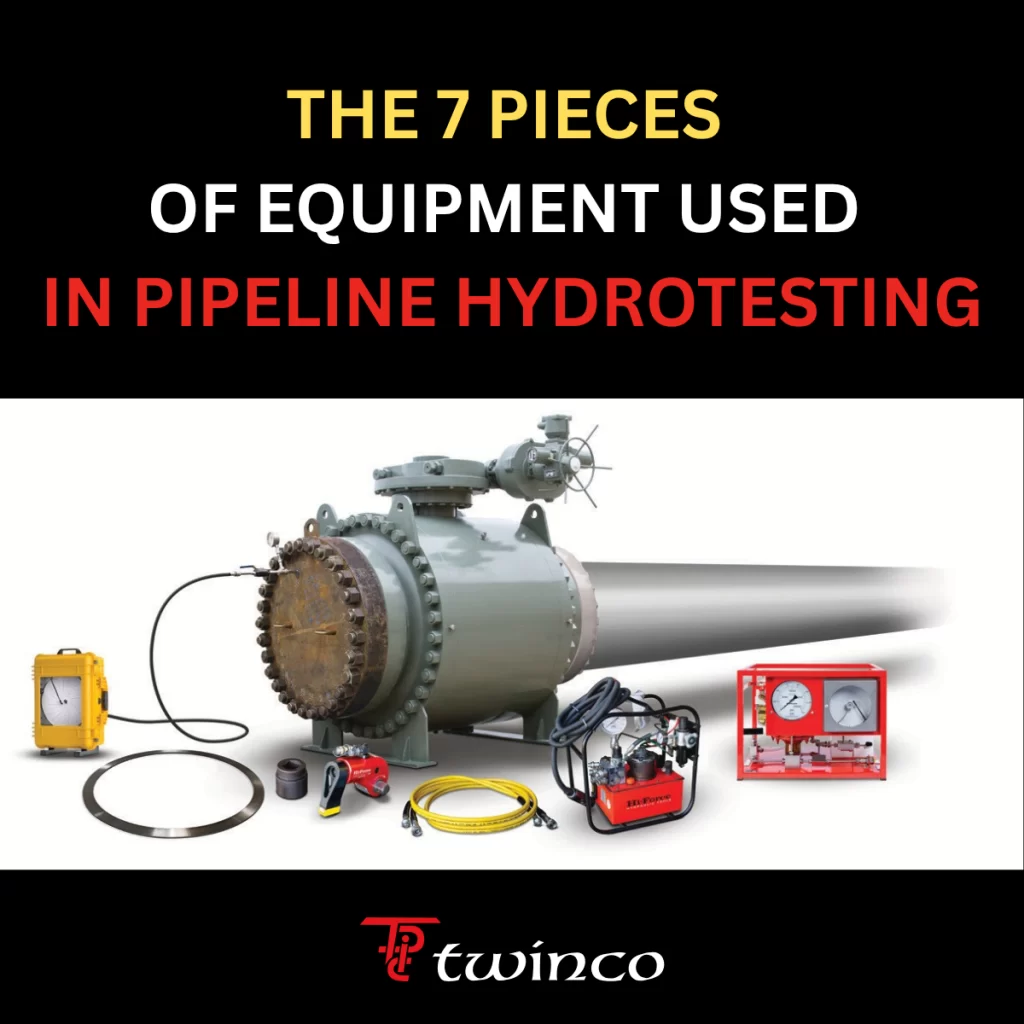
The 7 Pieces of Equipment Used in Almost Every Pipeline Hydrotest
Pipeline hydrostatic testing is one of the most important steps in ensuring the integrity and safety of pipelines used in […]


Rental
Why BUY blind flanges if you can RENT them?
Blind flanges are critical to safe operations – but owning them doesn’t always make sense, especially when they’re used once, […]