



The 7 Pieces of Equipment Used in Almost Every Pipeline Hydrotest
Pipeline hydrostatic testing is one of the most important steps in ensuring the integrity and safety of pipelines used in […]
-
 Author Twinco
 -
 5 Min
5 Min -
 19 May 2026
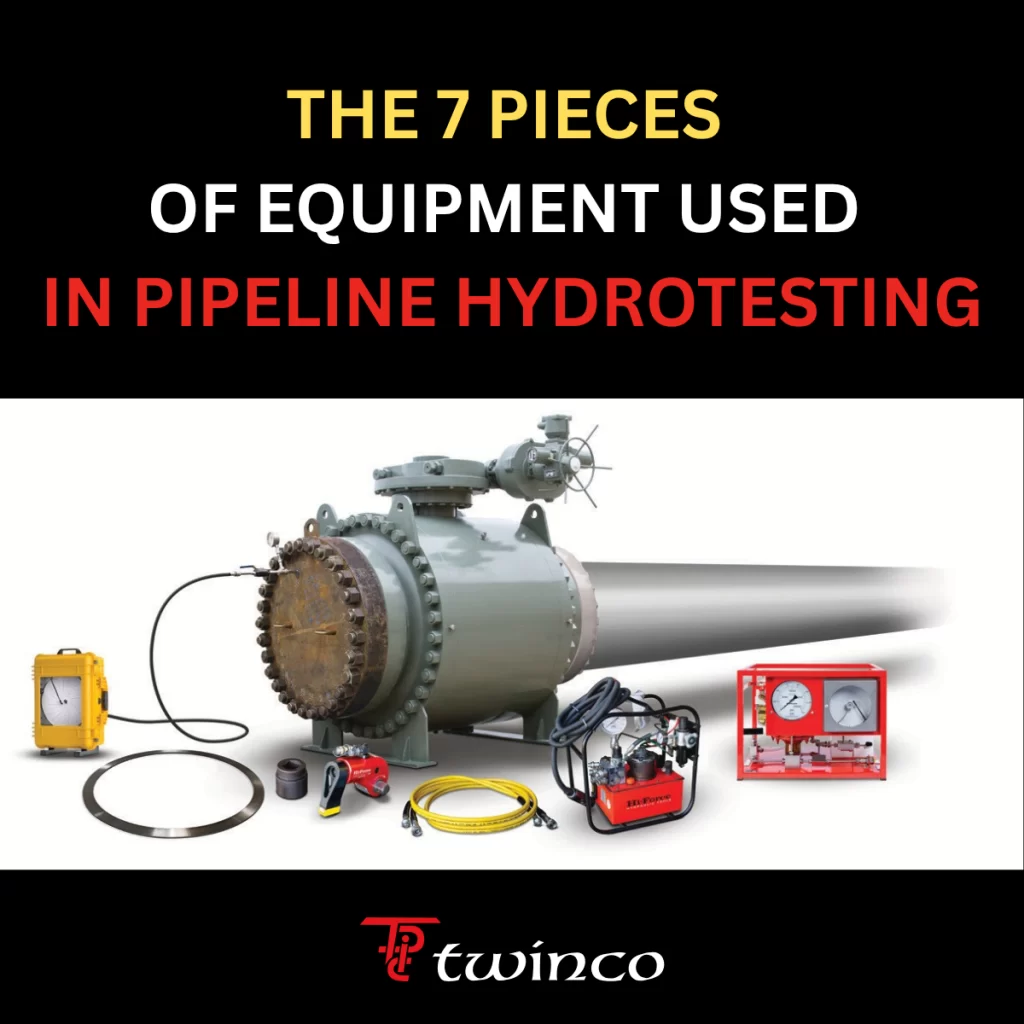
Pipeline hydrostatic testing is one of the most important steps in ensuring the integrity and safety of pipelines used in the oil, gas, petrochemical, and water industries. Before a pipeline is put into service, operators must verify that the pipe, welds, valves, and fittings can safely withstand pressures higher than their intended operating conditions.
Hydrostatic testing accomplishes this by filling the pipeline with water and pressurizing the system to a predetermined test pressure.
While the testing procedure can vary depending on the pipeline and applicable codes, most hydrotests rely on a similar set of equipment. Below are seven key components that are used in almost every pipeline hydrotest setup.
What Is Hydrostatic Testing?
Hydrostatic testing (commonly called hydrotesting) is a pressure test used to verify the strength and leak integrity of pipelines, pressure vessels, and piping systems.
The process typically involves:
- Filling the system with water
- Removing trapped air
- Pressurizing the system using a high-pressure pump
- Holding the pressure for a specified period
- Monitoring for pressure loss or leaks
Hydrotesting is performed during:
- New pipeline construction
- Pipeline maintenance and repairs
- Valve and pressure vessel testing
- Facility commissioning
Because water is nearly incompressible, hydrotesting is significantly safer than using compressed gas.
Why Hydrostatic Testing Is Required
Hydrostatic testing is required by multiple industry codes and regulations to verify system integrity before service.
Common standards include:
- ASME B31.4 – Liquid pipeline transportation systems
- ASME B31.8 – Gas transmission and distribution pipelines
- API 6D – Pipeline valves
- DOT pipeline regulations
Most pipeline tests are conducted at 125%–150% of the system’s maximum allowable operating pressure (MAOP).
This ensures the pipeline can safely handle real operating conditions while confirming that welds, flanges, valves, and fittings are leak-free.
The 7 Pieces of Equipment Used in Almost Every Pipeline Hydrotest
While each project is unique, most hydrotests use a similar group of equipment to safely isolate and pressurize the system.
Blind Flanges
Blind flanges are one of the most common isolation methods used during hydrotesting.
A blind flange is a solid flange used to seal off the end of a pipeline or vessel so pressure can be applied during the test.
They are commonly used when:
- Testing pipeline segments
- Isolating equipment
- Closing off branch connections
For large pipeline projects, blind flanges can become extremely heavy. Sizes of 36″, 48″, 60″, and larger are common in pipeline construction and often require lifting equipment for installation.
Many contractors choose to rent large blind flanges instead of purchasing them due to their cost and limited use after testing.
Stud Bolts and Nuts
Stud bolts and nuts secure the blind flange to the mating flange on the pipeline.
The most common bolting combination used in hydrotesting is:
- ASTM A193 B7 stud bolts
- ASTM A194 2H heavy hex nuts
These materials are chosen for their high strength and reliability under high pressure.
Proper bolting is critical because the flange connection must withstand the full hydrotest pressure without leaking or failing.
Gaskets
A gasket is placed between the flange faces to create a pressure-tight seal.
Common gasket types used during hydrotests include:
- Spiral wound gaskets
- Ring type joint (RTJ) gaskets
- Compressed fiber gaskets
The gasket material must be compatible with both the pressure rating and the flange type used in the system.
Even a perfectly installed blind flange can leak if the gasket selection is incorrect.
Hydrostatic Test Pumps
Hydrotest pumps generate the pressure required to test the system.
These pumps gradually pressurize the pipeline to the required test pressure, which may range from a few hundred PSI to several thousand PSI depending on the pipeline design.
Test pumps are typically:
- Electric driven
- Diesel driven
- Air driven
The pump must be capable of precise pressure control to safely increase pressure without shocking the system.
Chart Recorders or Digital Pressure Recorders
During a hydrotest, pressure must be monitored and recorded throughout the test period.
Historically, chart recorders were used to produce a paper pressure record over time. Today, many contractors use digital pressure recorders that provide more precise data and easier reporting.
Pressure recording is important because it provides documentation that the pipeline successfully passed the hydrotest.
Operators review the pressure curve to confirm that:
- The test pressure was achieved
- The pressure hold period was maintained
- No pressure loss occurred due to leaks
Isolation Plugs
Isolation plugs are mechanical devices inserted inside the pipe to temporarily seal the pipeline.
These plugs are often used when:
- Testing a section of pipeline without installing large blind flanges
- Performing maintenance inside existing pipelines
- Conducting localized testing
There are several types of hydrotest plugs including:
- Mechanical test plugs
- Inflatable test plugs
- Grip-type isolation plugs
Modern high-pressure plugs can safely hold thousands of PSI.
Bleed Valves
Bleed valves are small valves installed in the test setup to safely release trapped air or pressure.
They serve several important functions during a hydrotest:
- Venting air during system filling
- Releasing pressure after testing
- Allowing controlled depressurization
Proper air removal is essential because trapped air can affect test accuracy and create dangerous stored energy.
Why the Right Equipment Matters
Hydrostatic testing involves extremely high pressures, which means safety and reliability are critical.
Using the correct equipment helps ensure:
- Accurate test results
- Safe pressurization and depressurization
- Compliance with industry codes
- Protection of personnel and equipment
For this reason, many contractors work with specialized industrial suppliers who understand hydrotesting requirements and can provide the correct components quickly.
Supporting Hydrotesting Projects
Hydrotesting projects often require a combination of:
- Blind flanges
- Stud bolts and nuts
- Gaskets
- Isolation equipment
- Specialty test components
Working with experienced suppliers helps contractors avoid delays and ensure the right equipment is available when testing begins.
Explore More Blogs
Stay informed with our deep dives into industry trends, best practices, and essential product knowledge to help you make smarter decisions.
Rental
Understanding Valve Types and Their Role in Pipeline Safety
In any pipeline or industrial system, valves play a critical role in maintaining safety, controlling flow, and protecting equipment. Whether […]


Rental
Why BUY blind flanges if you can RENT them?
Blind flanges are critical to safe operations – but owning them doesn’t always make sense, especially when they’re used once, […]